

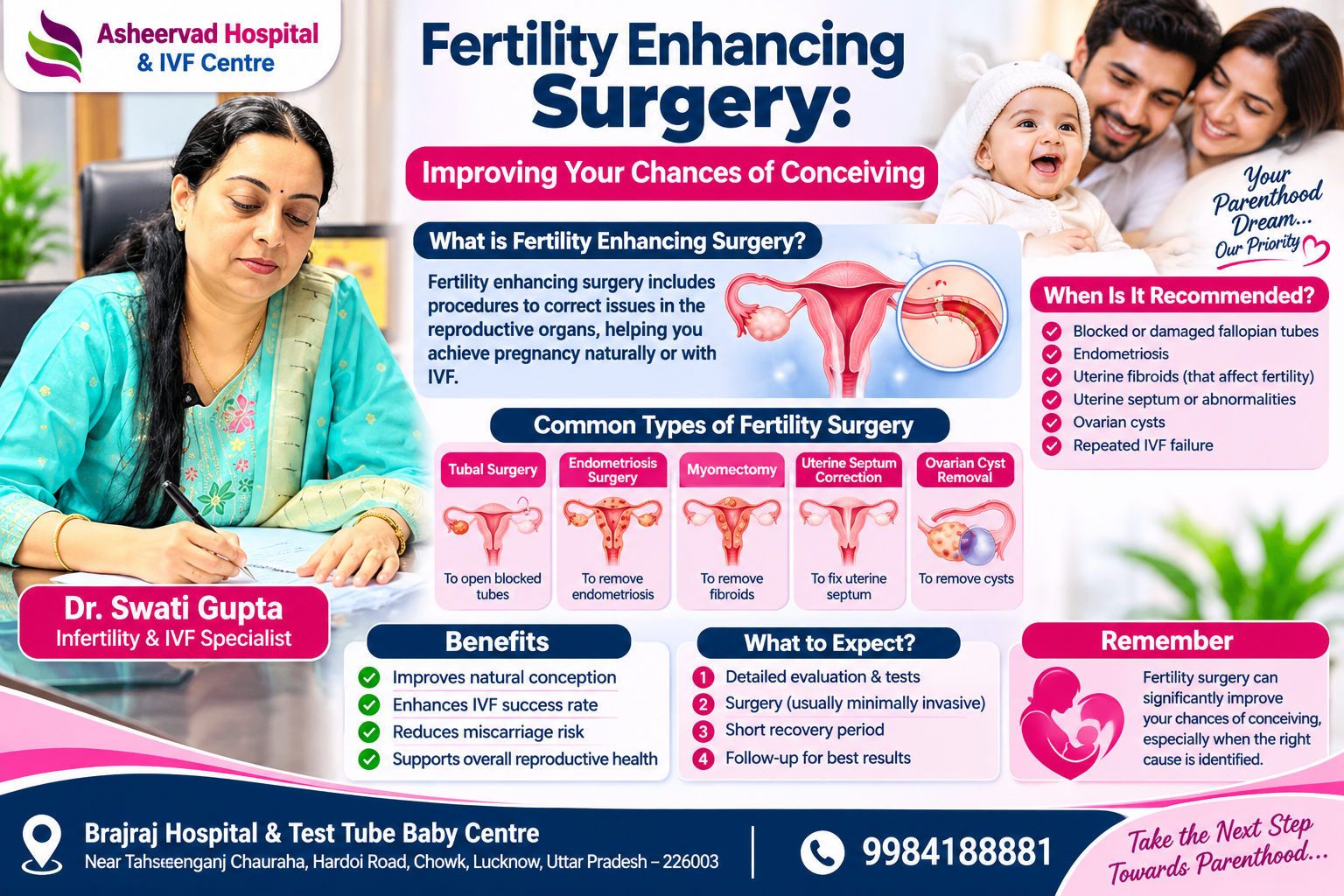
Fertility Enhancing Surgery: Improving Your Chances of Conceiving
SEO Title: Fertility Surgery in Lucknow: Types, Benefits & Treatment Options
Meta Description: Learn how fertility-enhancing surgery may help treat certain causes of infertility, including fibroids, endometriosis, blocked fallopian tubes, and uterine abnormalities.
Focus Keyword: Fertility Surgery Lucknow
Secondary Keywords: fertility enhancing surgery, infertility surgery, laparoscopic fertility surgery, endometriosis treatment, fibroid removal, blocked fallopian tube treatment, fertility specialist in Lucknow
Introduction
For couples trying to conceive, infertility can be an emotionally and physically challenging experience. While many fertility problems can be managed through medication or assisted reproductive technologies such as IVF, certain structural or anatomical conditions may require surgical treatment.
Fertility-enhancing surgery refers to medical procedures that aim to identify or correct specific reproductive problems that may interfere with natural conception or fertility treatment.
Depending on the diagnosis, surgery may help address conditions such as uterine fibroids, endometriosis, pelvic adhesions, selected fallopian tube problems, or abnormalities inside the uterus.
However, surgery is not necessary for every person experiencing infertility. Its suitability depends on age, ovarian reserve, the underlying condition, medical history, and reproductive goals.
If you are researching fertility surgery in Lucknow, this guide explains common procedures, their potential benefits, risks, and when a fertility specialist may recommend them.
What Is Fertility-Enhancing Surgery?
Fertility-enhancing surgery involves procedures performed to treat certain conditions affecting the reproductive organs.
The female reproductive system includes the ovaries, fallopian tubes, uterus, and cervix. Problems affecting the structure or function of these organs may sometimes make conception difficult.
Surgery may be recommended to:
- Remove certain uterine fibroids or polyps.
- Treat selected cases of endometriosis.
- Correct specific uterine abnormalities.
- Address certain fallopian tube conditions.
- Remove pelvic adhesions when clinically appropriate.
- Improve access to reproductive organs for fertility treatment in selected cases.
The purpose is not simply to perform surgery, but to address a clearly identified problem where the expected benefits outweigh the possible risks.
Common Types of Fertility-Enhancing Surgery
1. Laparoscopic Surgery
Laparoscopy is a minimally invasive surgical technique in which a doctor uses a small camera and specialised instruments inserted through small abdominal incisions.
It may be used to diagnose or treat selected pelvic conditions, including certain adhesions, endometriosis, or tubal abnormalities.
Potential advantages include smaller incisions and recovery that may be quicker than with some open surgical procedures.
However, laparoscopy is not recommended as a routine investigation for every person experiencing infertility. It is generally considered when symptoms, examination findings, or imaging suggest a specific condition requiring surgical assessment.
2. Fibroid Removal (Myomectomy)
Uterine fibroids are non-cancerous growths that develop in or around the uterus.
Their effect on fertility depends on their size, number, and location. Fibroids that distort the uterine cavity may be more relevant to reproductive outcomes than fibroids that do not affect the cavity.
A procedure called myomectomy removes fibroids while attempting to preserve the uterus.
It may be considered when fibroids are associated with symptoms or are thought to interfere with fertility or pregnancy.
Not every fibroid needs removal. Surgery can also create scar tissue and carries risks such as bleeding, infection, and possible effects on future pregnancy. The specialist should explain whether removal is likely to provide a meaningful benefit.
3. Hysteroscopic Surgery for Uterine Polyps
Uterine polyps are growths that develop from the lining of the uterus. Some polyps may be associated with abnormal bleeding or difficulties with fertility treatment.
Hysteroscopy is a procedure in which a thin camera is passed through the cervix to examine the inside of the uterus.
When appropriate, the doctor may remove polyps or certain other abnormalities using specialised instruments.
The procedure does not require an abdominal incision. Whether it is recommended depends on the findings and the patient’s reproductive circumstances.
4. Surgery for Endometriosis
Endometriosis is a condition in which tissue similar to the lining of the uterus grows outside the uterus. It may affect the ovaries, fallopian tubes, and surrounding pelvic structures.
Some patients experience pelvic pain, painful periods, or difficulty conceiving.
In selected cases, laparoscopic surgery may be considered to treat endometriosis-related lesions or adhesions.
However, surgery does not automatically improve fertility in every patient. In particular, surgery involving ovarian endometriomas can affect ovarian reserve. The decision should consider age, ovarian reserve, pain symptoms, disease severity, previous surgery, and whether IVF may be more appropriate.
5. Fallopian Tube Surgery
The fallopian tubes help the egg and sperm meet during natural conception. Blockage or damage to the tubes can interfere with this process.
Depending on the location and severity of the problem, selected patients may be considered for tubal surgery.
Possible procedures include:
- Tubal cannulation: A procedure that may help open certain blockages near the uterus.
- Tubal repair: Surgery to address selected structural problems.
- Treatment of hydrosalpinx: A hydrosalpinx is a fluid-filled, damaged fallopian tube. Removing or blocking the affected tube may be recommended before IVF in appropriate cases.
The choice between surgery and IVF depends on age, ovarian reserve, tubal condition, sperm health, other infertility factors, and personal preferences.
When May Fertility Surgery Be Recommended?
Surgery may be discussed when investigations identify a specific condition that could affect conception or pregnancy.
Examples include:
Uterine cavity abnormalities: Certain polyps, adhesions, or fibroids that distort the uterine cavity may require treatment.
Selected tubal problems: Some forms of tubal blockage may be suitable for surgical treatment, while severe damage may make IVF a more appropriate option.
Endometriosis: Surgery may be considered when symptoms are significant or when particular anatomical problems need correction.
Pelvic adhesions: Scar tissue around reproductive organs may sometimes interfere with normal anatomy and may be treated in selected cases.
The decision should be based on a complete fertility assessment rather than assuming that surgery will improve every patient’s chances of pregnancy.
Fertility Surgery vs IVF: Which Is Better?
Fertility surgery and IVF serve different purposes.
Surgery aims to correct a specific anatomical or structural problem. IVF involves fertilising eggs with sperm in a laboratory and transferring a suitable embryo into the uterus.
| Feature | Fertility Surgery | IVF Treatment |
|---|---|---|
| Main purpose | Correct selected reproductive abnormalities | Assist fertilisation and embryo transfer |
| Treatment approach | Surgical procedure | Medication and laboratory-based treatment |
| Natural conception | May become possible in selected cases | Not required for fertilisation |
| Recovery | Depends on the procedure | Depends on medication and treatment stages |
| Suitability | Depends on the condition being treated | Depends on overall fertility assessment |
Neither option is universally better. Some patients may benefit from surgery, some from IVF, and others from a carefully planned combination.
For example, certain patients with hydrosalpinx may be advised to have treatment before IVF. In other situations, surgery may delay fertility treatment without providing a meaningful benefit.
Benefits of Fertility-Enhancing Surgery
When appropriately recommended, surgery may offer several potential benefits:
- Treats specific anatomical problems: It can address selected abnormalities affecting the uterus, tubes, or pelvic structures.
- May support natural conception: Some procedures may improve the possibility of natural pregnancy in appropriately selected patients.
- May improve conditions before IVF: Treatment of certain problems, such as hydrosalpinx, may be recommended before assisted reproduction.
- May relieve symptoms: Procedures for conditions such as endometriosis or fibroids may also help manage pain or abnormal bleeding.
- Can provide diagnostic information: Some procedures allow doctors to examine reproductive structures directly.
The benefits depend on the diagnosis, surgical technique, and individual health factors. Surgery cannot guarantee pregnancy.
Risks and Limitations of Fertility Surgery
Every surgical procedure has potential risks. These vary according to the type of operation and the patient’s medical condition.
Possible risks include:
- Bleeding and infection.
- Complications related to anaesthesia.
- Injury to nearby organs.
- Formation of new pelvic adhesions.
- Scarring of reproductive tissues.
- Changes in ovarian reserve after certain ovarian procedures.
- Increased risk of ectopic pregnancy after some tubal procedures.
Recovery time also varies. Some minimally invasive procedures allow a relatively quick return to routine activities, while more complex operations may require a longer recovery period.
Before surgery, ask your doctor about the expected benefits, possible complications, recovery time, and alternatives.
What Tests Are Needed Before Fertility Surgery?
A fertility specialist may recommend different investigations depending on the suspected condition.
These may include:
Pelvic ultrasound: Helps assess the uterus, ovaries, fibroids, cysts, and other pelvic structures.
Hysterosalpingography (HSG): An imaging test that evaluates the uterine cavity and whether the fallopian tubes are open.
Hormone tests: Tests such as AMH may help assess ovarian reserve, while other hormone tests may be recommended according to the patient’s symptoms and medical history.
Semen analysis: Evaluates sperm-related factors and helps ensure that both partners are assessed.
Hysteroscopy: Allows direct examination of the inside of the uterus when clinically indicated.
Not every patient needs every test. Investigations should be selected according to the individual’s medical history and examination findings.
Recovery After Fertility Surgery
Recovery depends on the procedure performed.
After surgery, patients may be advised to:
- Follow the prescribed medication schedule.
- Keep surgical wounds clean, if applicable.
- Avoid strenuous activity for the recommended period.
- Attend follow-up appointments.
- Report unusual pain, fever, heavy bleeding, or other concerning symptoms.
- Discuss when it is appropriate to resume trying to conceive.
The time before attempting pregnancy varies according to the operation and healing process. Patients should follow their surgeon’s advice rather than relying on a general recovery timeline.
Frequently Asked Questions
1. Can fertility surgery guarantee pregnancy?
No. Surgery may correct certain conditions that affect fertility, but pregnancy depends on several factors, including age, ovarian reserve, sperm health, and the underlying diagnosis.
2. Is laparoscopic surgery better than open surgery?
Laparoscopy may offer smaller incisions and a different recovery experience for suitable procedures. However, the appropriate surgical method depends on the condition and the surgeon’s assessment.
3. Can fibroid removal improve fertility?
It may help selected patients, particularly when fibroids distort the uterine cavity. However, removing every fibroid is not recommended, and surgery has its own risks.
4. Is surgery always required before IVF?
No. Many patients can proceed to IVF without fertility surgery. Surgery is considered when a specific condition makes it medically appropriate.
5. How long after fertility surgery can I try to conceive?
The recommended waiting period depends on the procedure, healing, and individual medical circumstances. Your surgeon will advise when it is safe to try.
Conclusion
Fertility-enhancing surgery can be an important treatment option for selected patients with structural or anatomical reproductive problems. Procedures involving fibroids, polyps, endometriosis, pelvic adhesions, or fallopian tube conditions may help address specific causes of infertility.
However, surgery is not the right choice for everyone. A complete fertility assessment is essential to determine whether surgery, medication, IVF, or a combination of treatments is most appropriate.
If you are considering fertility surgery in Lucknow, consult a qualified fertility specialist and gynaecological surgeon. Discuss your diagnosis, expected benefits, possible risks, recovery period, and alternative treatment options before making a decision.
Medical Disclaimer: This article is for general educational purposes only. It does not replace personalised medical advice, diagnosis, or treatment. Always consult a qualified healthcare professional regarding your individual circumstances.
Hospital Details
Brajraj Hospital & Test Tube Baby Centre
Address: Near Tahseenganj Chauraha, Hardoi Road, Chowk, Lucknow, Uttar Pradesh – 226003
Phone: 9984188881
Website: https://brajrajhospital.com/
Contact the hospital to confirm current consultation availability and the specific surgical and fertility services offered.